

The secret to detangling without damage
Healthy, beautiful hair begins with gentle care. Regardless of texture, length, or density, every hair type experiences tangles from time to time. The key is not simply removing knots, but detangling in a way that preserves the hair’s natural strength, softness, and shine.
Detangling should be approached as a ritual rather than a routine, a moment of care that respects the integrity of every strand.
Why does hair become tangled?
Daily movement, friction, environmental stressors, and a lack of moisture can all cause hair strands to intertwine. Over time, these small knots may contribute to breakage, frizz, and a loss of smoothness.
When the hair cuticle becomes raised or roughened, strands are more likely to catch on one another. While tangles are a natural part of everyday life, the way they are handled can make a remarkable difference to the overall condition and appearance of the hair.
Detangling and brushing: Understanding the difference
Although often considered the same step, detangling and brushing serve different purposes.
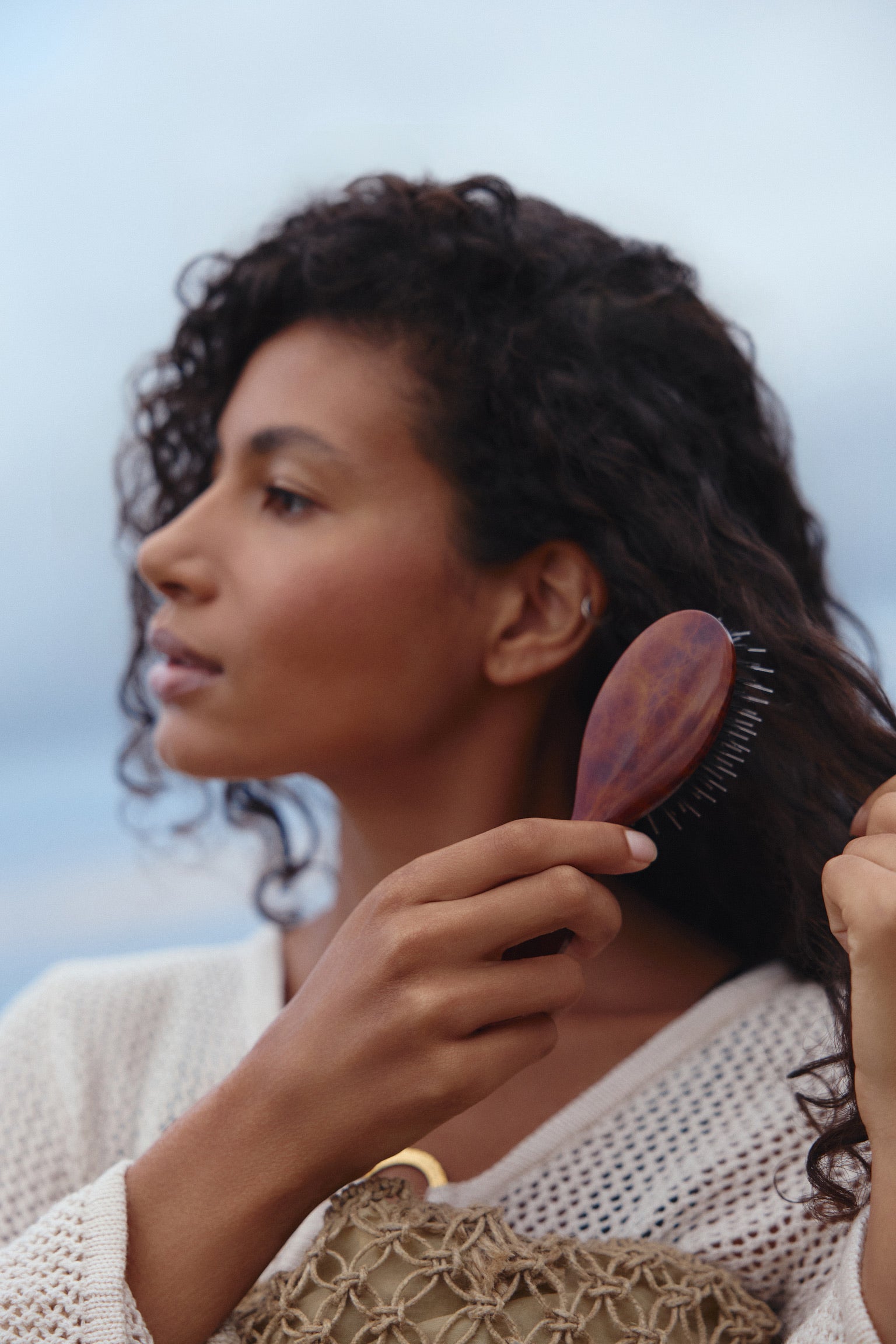
Detangling focuses on gently releasing knots and separating strands without causing unnecessary tension. Brushing follows, helping to smooth the hair and distribute the scalp’s natural oils throughout the lengths.
Together, these rituals help maintain softness, enhance shine, and support healthier-looking hair over time.
How to detangle hair gently
Successful detangling is never about force. Instead, it requires patience, technique, and the right approach.
Always begin at the ends of the hair and gradually work upward toward the roots. This method allows knots to loosen naturally while minimizing stress on the hair fibre.
For more stubborn tangles, gently separate the strands with your fingers before continuing to brush. Taking a few extra moments can help prevent unnecessary breakage and preserve the hair’s natural resilience.
Hair can be detangled when dry or slightly damp, but it is best to avoid aggressive brushing when the hair is soaking wet, as this is when it is most vulnerable to stretching and damage.
Why the right brush matters
The quality of your brush plays an important role in the health and appearance of your hair.
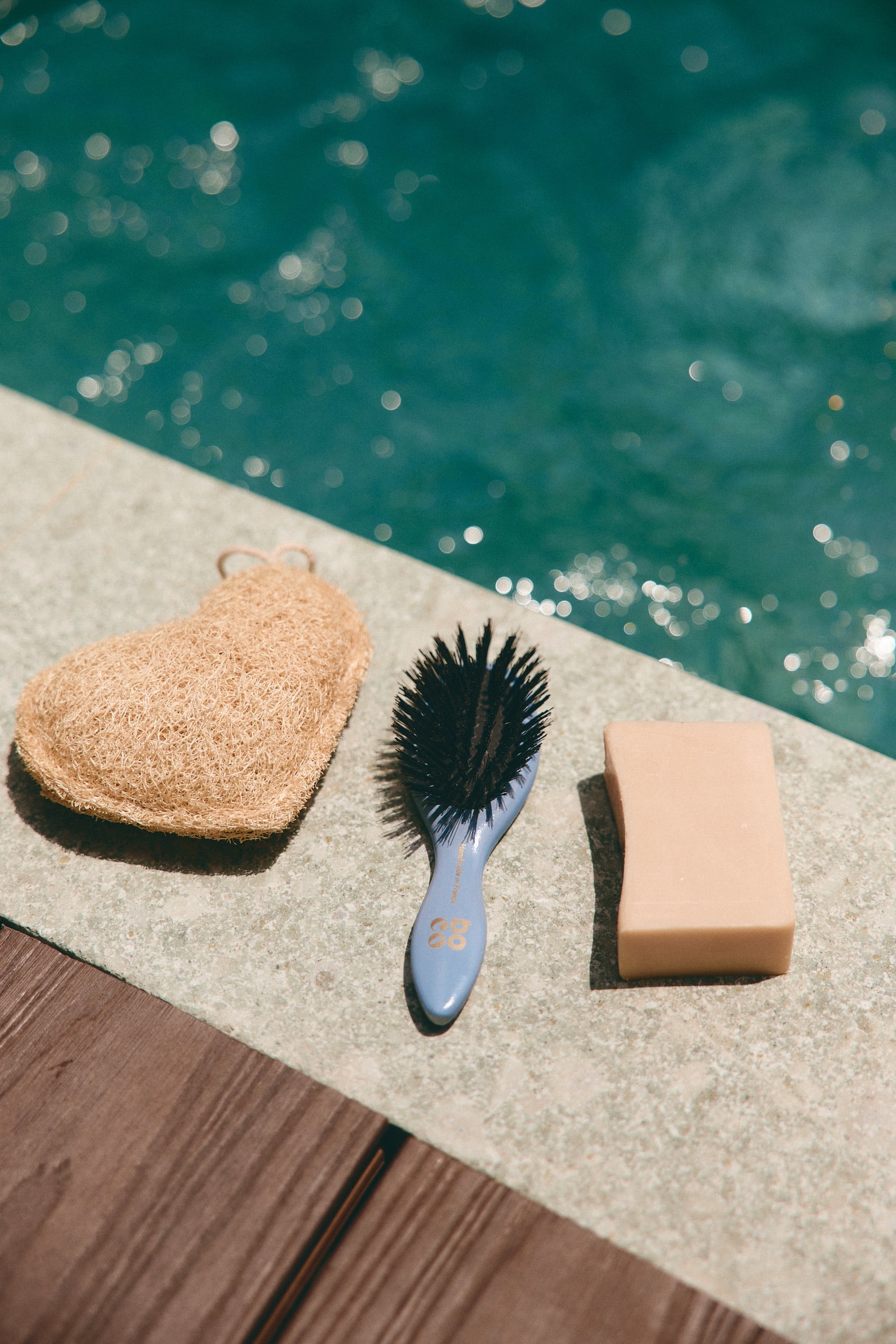
A carefully crafted brush glides through the hair with greater ease, helping to minimize tension while supporting a smoother finish. Natural boar bristles are particularly valued for their ability to distribute the scalp’s own nourishing oils from root to tip.
This natural conditioning process helps smooth the cuticle, enhance shine, reduce the appearance of frizz, and leave the hair feeling softer and more refined.
More than a styling tool, a well-made brush becomes an essential part of a thoughtful hair care routine.
A ritual for healthier-looking hair
Detangling is often overlooked, yet it plays an important role in maintaining the long-term beauty of the hair.
Taking the time to detangle carefully helps preserve the hair’s natural structure, improve manageability, and create a smoother, more polished appearance. With consistent care, the hair feels softer, looks shinier, and becomes easier to style.
A beautifully crafted brush transforms detangling from a necessity into a moment of care.
Three expert detangle tips
-
Start at the ends and work gradually upward toward the roots.
-
Never pull through a knot; gently loosen it first with your fingers.
-
Incorporate detangling into your evening routine to help prevent tangles from forming overnight.