

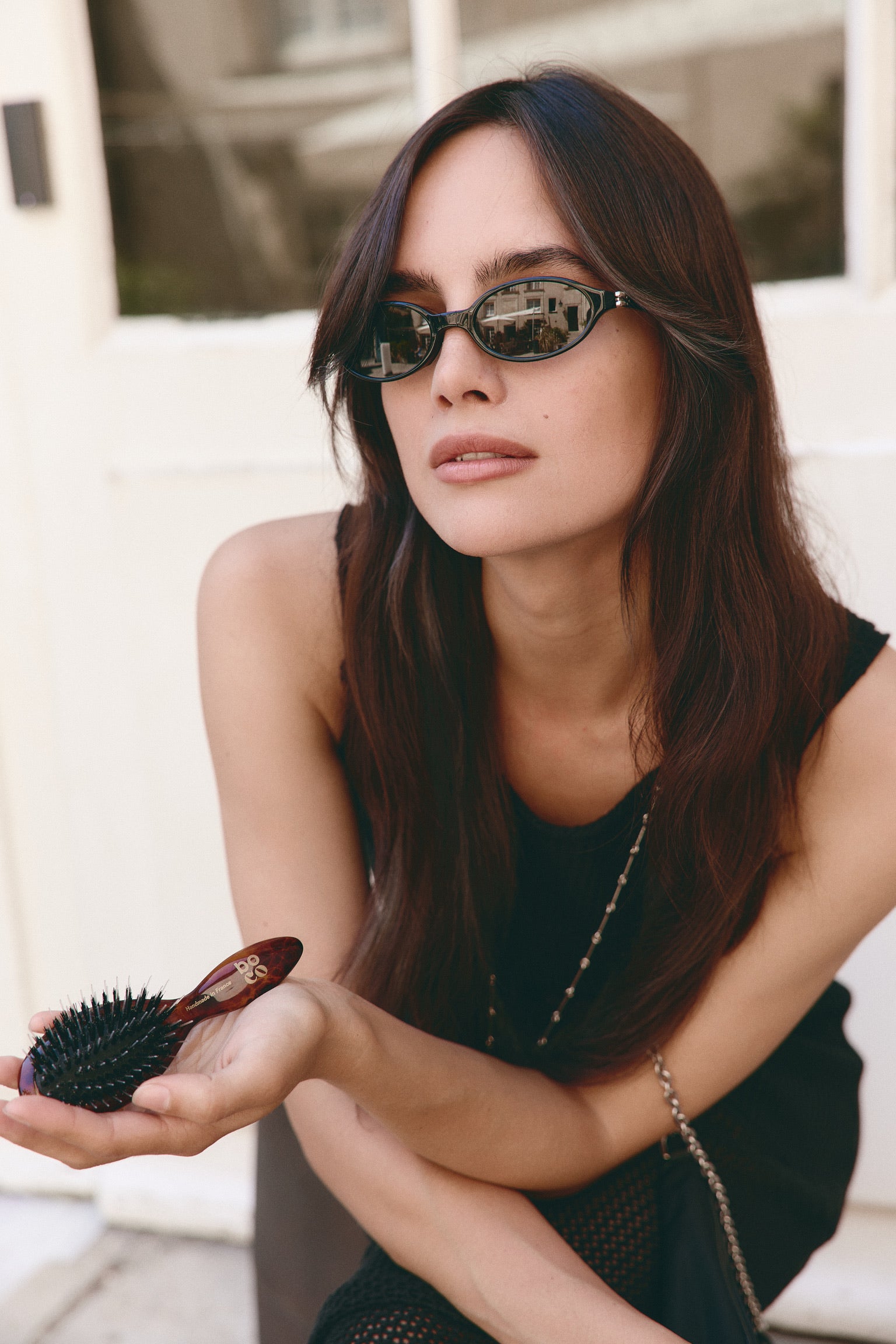
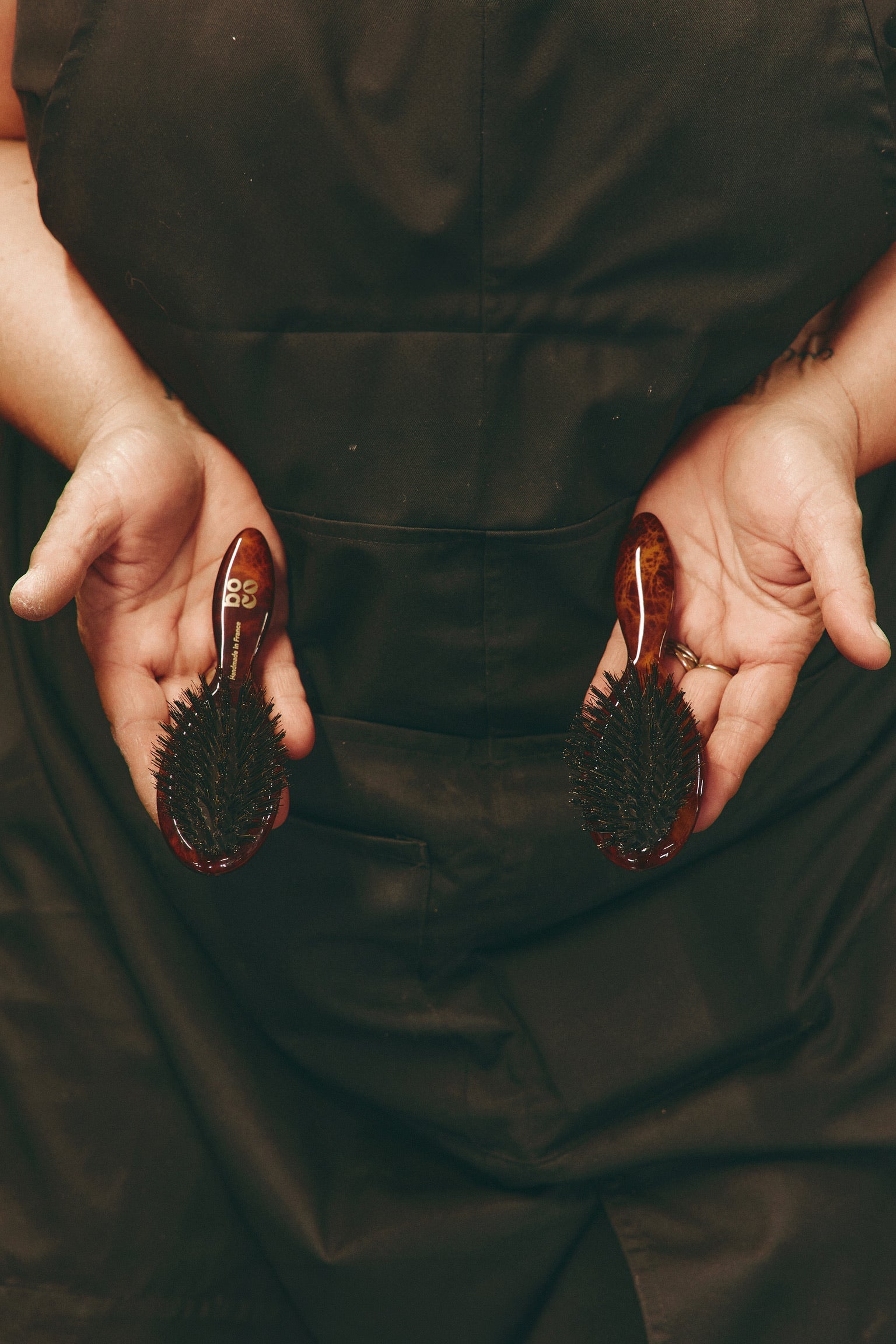
Why choose a boar bristle brush instead of a plastic hairbrush
Your hairbrush shapes far more than your hairstyle. It influences the overall health, shine, and balance of your hair. Yet many traditional brushes made with synthetic materials can place unnecessary stress on both the scalp and the hair fiber. Replacing plastic with carefully crafted natural materials transforms a daily habit into a refined beauty ritual.
Plastic hairbrushes have long been chosen for convenience, but convenience rarely equals care. Rigid synthetic bristles often create tension through the lengths, disrupting the hair cuticle rather than respecting it. Over time, repeated friction may leave hair dull, fragile, and more prone to breakage.
A well-crafted boar bristle brush offers a completely different experience — softer, more intuitive, and deeply aligned with the natural structure of the hair itself.
Why can synthetic bristles damage the hair?
Detangling should never feel aggressive. Yet stiff plastic bristles often pull against knots instead of easing through them delicately, creating tension that may weaken the strands over time. Repeated brushing with harsh materials can contribute to unnecessary breakage and discomfort, especially on delicate or textured hair.
Natural bristle craftsmanship is designed with movement and flexibility in mind. Set within soft cushioned bases and paired with carefully balanced fibers, these brushes glide through the hair with far less resistance. The result is a brushing experience that feels effortless, gentle, and refined.
Why does plastic create static and frizz?
Static occurs when opposing electrical charges build through friction. Synthetic materials tend to intensify this reaction, which explains why hair can suddenly appear frizzy, weightless, or difficult to smooth after brushing.
Natural materials behave differently. Wood acts as a natural insulator, while boar bristles, composed of keratin, just like human hair, work in harmony with the fiber rather than against it. Together, they help reduce static and leave the hair looking softer, sleeker, and more polished.
Why are boar bristle brushes considered timeless?
Unlike plastic, which can warp, crack, or lose its structure over time, high-quality natural brushes are created to endure beautifully for years. Their longevity lies not only in the materials themselves, but also in the craftsmanship behind them. Hand-finished brushes made with traditional techniques become objects of daily luxury, designed to be preserved, cared for, and used for decades rather than replaced season after season.
How do boar bristles enhance the hair naturally?
One of the most remarkable qualities of boar bristles is their ability to distribute the scalp’s natural oils evenly from root to lengths. This simple yet effective process helps nourish the hair naturally while enhancing softness and luminosity.
Unlike synthetic bristles, which merely pass over the surface, boar bristles work with the hair’s natural composition to create a healthier-looking finish with every stroke. Over time, hair appears shinier, smoother, and more balanced, with less visible dryness through the ends. A simple ritual of brushing morning and evening can help restore movement, polish, and vitality to the hair naturally.
A gentler ritual for the scalp
The scalp is delicate, yet often overlooked. Sharp plastic bristles may feel abrasive against the skin, sometimes contributing to irritation, imbalance, or excess oil production.
Boar bristle brushes offer a softer alternative. Their flexible texture provides a subtle scalp massage that helps stimulate microcirculation while lifting away daily impurities without disrupting the skin’s natural balance. More than a styling tool, a natural hairbrush becomes part of a slower, more intentional beauty ritual.
Valet av hårborste kan påverka både hårets kvalitet och hårbottens välmående. Till skillnad från många plastborstar hjälper en hårborste med naturborst till att fördela hårets naturliga oljor genom längderna, vilket kan bidra till ett mjukare, glansigare och mer välvårdat hår.
Naturborst skapar mindre friktion vid borstning, vilket kan minska friss, statisk elektricitet och slitage på hårstråna. Samtidigt ger den en skonsam stimulering av hårbotten och stödjer hårets naturliga balans. Resultatet är ett hår som känns friskare, ser mer glansfullt ut och behåller sin naturliga lyster över tid.
Read more
As winter gives way to longer, brighter days, the change in season can also affect the hair. Spring is often a time when shedding increases noticeably, leaving hair feeling weaker, duller, and more...
Fine hair has a naturally soft and delicate texture, yet it often loses volume more quickly than thicker hair types. Because each strand is finer in diameter, the roots have less natural support, c...